

Build 10x products in minutes by chatting with AI - beyond just a prototype.
Topics
Can beginners use vibe coding for an eCommerce website?
Does vibe coding replace developers?
Can AI create a fully working online store?
This blog explains how to create a fully functional eCommerce store using Vibe Coding, including setup, design, product management, payment integration, and optimization techniques for improved performance and user experience.
How to build an eCommerce store with vibe coding without learning complex coding?
The short answer is simple. Modern AI platforms can help founders, creators, freelancers, and small business owners create a working website, connect a database, manage inventory, design a landing page, and launch a store with far less manual coding than before.
Global eCommerce sales are projected to cross $6.88 trillion in 2026, showing how fast online shopping keeps growing.
So, more people now want a fast way to build a website and start selling online. That is where vibe coding starts feeling practical, fun, and surprisingly useful.
Traditional coding for an eCommerce website can take a lot of time.
Developers often need to manage the tech stack, connect the database, handle server setup, create components, write logic, fix layout issues, and test every page carefully. Vibe coding changes that process by making website building feel more conversational and creative.
Many creators now use AI tools and vibe coding to create:
The biggest difference is the experience itself. Instead of focusing only on coding syntax, users can describe the feeling, layout, and features they want while AI helps build the website step by step.
Before opening any vibe coding tool, spend some time planning the website.
Start by asking:
A lot of beginners skip planning and jump straight into coding prompts. Then the project becomes messy.
Next, define the core pages:
| Page | Purpose | Main Features |
|---|---|---|
| Landing page | Introduce the brand | Hero image, CTA, featured products |
| Shop page | Display products | Product grid, filters, search |
| Product page | Show details | Images, reviews, price |
| Cart page | Manage orders | Payments, shipping, totals |
| Account page | User access | Orders, profile, tracking |
Clear structure helps AI tools produce better results.
Not all tools work the same way. Some focus on design. Some focus on backend logic. Some generate a full stack app.
Popular tools like Rocket.new, Lovable, Replit, Cursor, and Bolt are often used for vibe coding projects.
A good vibe coding tool should help you:
Most tools also support AI chat prompts. So instead of manual coding, the user can describe the layout or function.
For example: “Create a modern eCommerce landing page with dark colors, neon accents, large hero image, clean product grid, and mobile responsive design.”
That single prompt can create a full landing page structure, Honestly, that feels wild the first time you try it.
The landing page is often the first thing customers notice on an eCommerce website, so the design needs to feel clean, fast, and visually clear from the start. With vibe coding, you can describe the style, layout, and feeling you want, and AI helps create the page structure much faster.
Add key landing page elements like:
Good vibe coding works best when prompts stay specific and direct. After building the layout, ask the AI to optimize the landing page for SEO and write alt text for images so search engines can understand the website content better.
Once the landing page is ready, the next step is building the actual shopping experience. The shop page should feel clean, organized, and easy to browse so customers can quickly find products without confusion.
With vibe coding, AI can help create both the frontend layout and the backend database structure much faster.
Many AI tools can also generate a database schema from plain language prompts. Users can describe the eCommerce system they want, and AI creates tables, relationships, and backend structure automatically. That removes a huge amount of manual coding and makes the building process feel much smoother.
A real eCommerce store needs more than a good-looking page. The backend should handle checkout, stock updates, user activity, and order flow without confusion. With vibe coding, AI can help create these server functions, but each part still needs careful testing.
Many beginners focus only on design, but backend logic matters just as much. After AI creates the checkout flow, test the process carefully. AI can still create bugs, so fix problems step by step instead of changing the entire project at once.
Rocket.new combines AI app building , market research, and competitor intelligence inside one platform. According to Rocket.new documentation, users can research the market, build apps, and monitor competitors from a shared workspace.
The platform supports several features that work well for eCommerce projects:
Rocket.new also connects strategy with execution, which makes the workflow feel more organized. Instead of switching between random tools, users can manage coding, store planning, competitor tracking, and research from one place.
For founders building from scratch, that can save serious time while making the eCommerce process much easier to manage.
Traditional coding can sometimes feel rigid and highly technical, especially during the early stages of building a website. Vibe coding changes that experience by making the creative process feel more natural, collaborative, and idea driven.
Instead of focusing only on syntax, developers and creators spend more time thinking about:
That makes the process much more approachable for founders, creators, and clients who may not have deep coding knowledge. A client can simply describe the type of website they want in plain language, and AI helps create the first version quickly.
After that, the developer reviews the logic, fixes issues, improves the layout, and refines the final result. So the workflow becomes far more collaborative while still keeping human creativity and decision making at the center of the project.
A strong insight shared during a LinkedIn discussion around Rocket.new was this line from co-founder Vishal Virani.
“Vibe coding solved how to build. It never solved what to build, or why.” Linkedin
That idea connects directly with modern eCommerce projects. Building a website faster with AI matters, but understanding customer needs, product positioning, pricing, and market direction matters just as much.
Every eCommerce project runs into problems at some point, especially when AI handles large parts of the coding process.
Some issues are small layout bugs, while others affect payments, database connections, or server logic. The good part is that most problems become easier to manage when you fix them one step at a time instead of rebuilding the entire project.
| Common Problem | What Usually Happens | Simple Fix |
|---|---|---|
| Broken server routes | Pages or API requests stop working | Review server paths and reconnect routes |
| Database mismatch | Product or user data fails to load properly | Check database fields and relationships |
| Layout bugs | Components break on certain screens | Adjust responsive design settings |
| Payment errors | Checkout fails or totals calculate incorrectly | Retest payment logic and cart flow |
| Inventory sync problems | Stock numbers do not update correctly | Reconnect inventory updates to orders |
| Mobile responsiveness issues | Website looks broken on phones | Refine mobile layout and spacing |
| Slow page loading | Images or components load too slowly | Compress images and reduce heavy scripts |
| SEO problems | Search engines struggle to read the website | Improve headings, alt text, and metadata |
The best approach is staying specific with prompts and fixes. Instead of changing the whole app after every issue, give AI more context and solve one problem at a time. Clear instructions usually create cleaner results and make the vibe coding process much smoother.
A good-looking eCommerce website only works when customers can actually find it and use it comfortably. That is why SEO and user experience should be part of the vibe coding process from the beginning.
Ask AI to help with:
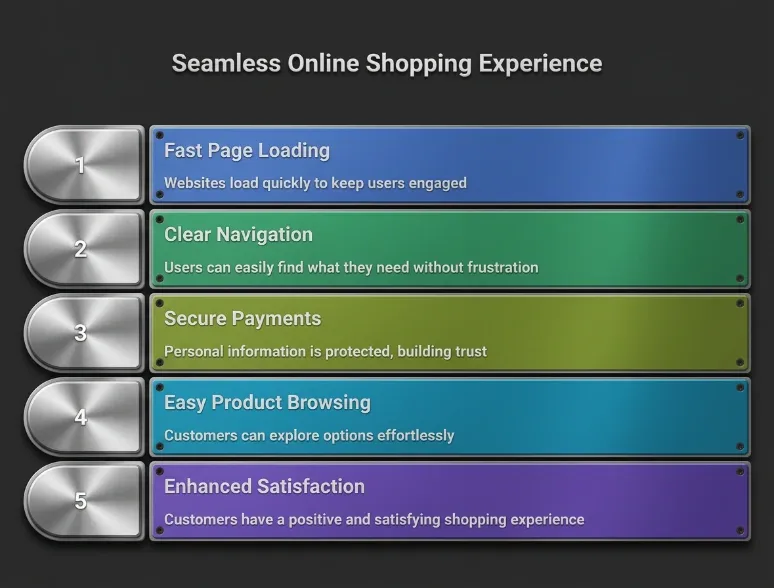 SSL certificates help create more trust during checkout and account login. Small improvements across the website often make the shopping experience feel smoother and more professional.
Once the eCommerce website is ready, the final step is deployment. Most modern vibe coding tools now support one click deployment, which makes the launch process much faster and less stressful for beginners.
After deployment, make sure to:
After those final checks, the store is ready to go live. Going from simple prompts to a fully working eCommerce website feels pretty satisfying, and honestly, it shows how much modern coding has changed.
AI is changing how eCommerce websites are built. More founders and small business owners can now create apps, stores, and landing pages without needing large engineering teams or months of manual coding work.
That does not remove the role of the developer. Instead, developers now spend more time reviewing logic, fixing edge cases, improving performance, and guiding AI generated output in the right direction.
The moving parts of eCommerce projects still exist, but AI now handles more repetitive coding tasks. That makes building a website faster, simpler, and much more approachable for smaller businesses and creators.
Building an eCommerce website from scratch used to involve long development cycles, backend setup, database planning, server management, and heavy coding work. For many small business owners, that process felt expensive, technical, and difficult to manage without a large team.
Vibe coding changes that experience by letting users describe the website, layout, features, and customer flow in plain language while AI helps create the app structure much faster. Developers still guide the logic and testing, but the overall process becomes simpler, faster, and more creative for modern eCommerce projects.
Want to build and manage your eCommerce project from one workspace? Rocket.new combines AI app building, competitor research, and website monitoring to help founders move from idea to launch faster.