

Create and launch your finance AI application in just minutes.
What are top ai use cases in financial services?
How quickly can financial institutions start using AI?
Is customer data safe when using generative ai?
Can AI replace human intelligence in finance?
AI is altering the financial industry by handling key operations. This article reviews top AI use cases in financial services, from fraud detection and operational improvements to personalized client advice and investment analysis. Learn to apply these technologies.
You're likely seeking insights on how AI systems are transforming the financial services industry. You may be with a financial institution, investment firm, or fintech startup, wondering where to invest in artificial intelligence to reduce time-consuming tasks and improve outcomes.
This blog examines real-world AI use cases in financial services, illustrating how financial services organizations are utilizing AI technologies to lower operational costs, enhance customer interactions, and improve compliance. By the end, you'll know exactly where to apply AI in your world and what steps to take next.
AI's ability to process vast datasets and learn from them is reshaping how financial services are delivered and consumed. Check out the top five AI use cases in financial services.
Financial organizations are facing ever‑growing threats—from money laundering to rogue trading. AI algorithms and machine learning enable financial institutions to automate fraud detection, risk assessment, and credit scoring by leveraging pattern recognition across historical market data and real-time financial transactions.
Analytics systems can detect anomalies in vast amounts of unstructured data. Generative AI even augments datasets with synthetic examples of fraud to train better models.
In parallel, modern AI systems handle credit scoring more holistically, analyzing customer data from various sources to make more accurate decisions.
Highlights
Real-time fraud prevention and AML screening
Automated credit risk assessment
Synthetic data generation to train robust models
Generative AI for proactive risk management
AI is no longer just a buzzword in finance it’s driving real transformation. From Norway’s sovereign fund saving hundreds of millions with autonomous trading to wealth bots providing personalized advice at scale, AI is reshaping how we invest, trade, and manage risk.→ Check out entire LinkedIn post here.
Financial operations are often burdened with repetitive tasks, such as report generation, document processing, and data reconciliation. AI in finance automates these routine tasks, freeing teams from time-consuming operations.
Robotic process automation and natural language processing (NLP) can extract data from financial documents and regulatory filings, reducing manual report work by up to 50 %.
Cash flow forecasting and payment automation—already used by 63 % of CFOs—boost efficiency and accuracy.
AI Efficiency Boosts
Automate document search, contract analysis, and pitch book creation
Streamline report generation, balance sheets, and income statements
Improve payment processing and cash forecasting systems
This diagram shows how AI automates document processing, transforms data, and outputs actionable reports.
Clients expect tailored advice and fast support. AI in financial services enables personalized services through customer relationship management powered by predictive analytics, sentiment analysis, and chatbots.
AI algorithms analyze customer data, market data, and historical trends to provide personalized financial advice, investment strategies, and credit products. Generative AI chatbots provide 24/7 support.
Sentiment analysis on social media and news helps gauge market sentiment and align investment messaging. Personalization increases customer satisfaction and loyalty.
Benefits to customers:
Tailored advice aligned with goals and risk profiles
Instant support from virtual assistants
Market-aware investment insights
In the realm of retail, the utilization of Retrieval-Augmented Generation (RAG) technology has revolutionized customer experiences, particularly in the fashion sector. A prominent fashion retailer has embraced RAG to orchestrate seamless and hyper-personalized shopping expeditions while streamlining operational efficiencies.→ LinkedIn post
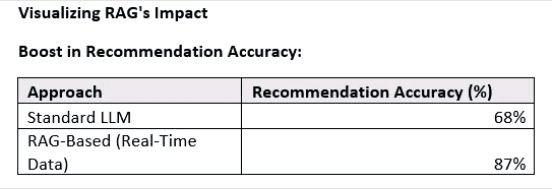
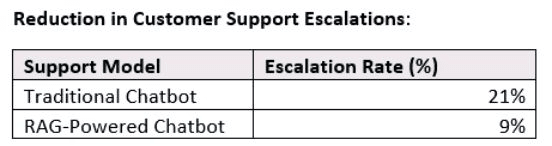
Investment firms rely on analyzing financial data and historical market data to inform their decisions. AI technologies support predictive modeling, agent-based AI, and algorithmic trading at high speeds.
AI systems can simulate market conditions under various scenarios, helping build strategic portfolios and managing risk dynamically.
AI tools, such as Claude for Financial Services, integrate multi-source market data to automate due diligence, financial modeling, and compliance.
Why it matters
Better predictive accuracy via deep learning on vast data
Faster, smarter investment decisions
Efficient compliance in trading workflows
How AI is transforming these fields- From predictive analytics optimizing investment strategies to hyper-personalized marketing campaigns boosting customer engagement, AI is no longer a buzzword—it’s a strategic necessity. 📊🚀→ LinkedIn Post
Managing regulatory compliance is a major burden. AI-powered compliance tools can process complex regulations, screen for financial crime, and generate scenario‑based reports.
Generative AI helps create tailored compliance reports and compliance code; NLP ensures ongoing adherence to evolving rules .
Platforms like Quantexa and Xapien help financial institutions automate risk assessment and client due diligence using entity resolution and AI models.
Compliance advantages
Continuous AML/CTF screening
Automated regulatory scenario simulation
Reduced manual workload in reporting
Over the past month, I’ve been buried in 168 papers, legal texts, and candid conversations with practitioners-unraveling how AI governance is silently transforming boardrooms and courtrooms alike. What began as a curiosity quickly became an obsession when I spotted patterns no one’s talking about.→ LinkedIn post
If you’re ready to adopt financial services AI, here’s a practical roadmap:
Map your most time-consuming tasks: e.g., document review, Outlook forecasting
Pilot AI tools for a specific case, such as fraud detection or customer service
Evaluate data quality and data management systems
Integrate AI algorithms gradually—test with historical data and market data
Monitor performance, refine risk models, and document ethical AI development
This Python snippet uses scikit-learn to build a basic fraud detection model. Adjust the parameters and train on your financial transactions.
1 2 3 4 5 6 7 8from sklearn.ensemble import RandomForestClassifier from sklearn.model_selection import train_test_split from sklearn.metrics import classification_report X_train, X_test, y_train, y_test = train_test_split(transactions, labels, test_size=0.3) model = RandomForestClassifier(n_estimators=100, max_depth=10) model.fit(X_train, y_train) print(classification_report(y_test, model.predict(X_test)))
This code shows how machine learning models can support fraud prevention.
| Use Case | AI Technology | Benefit |
|---|---|---|
| Fraud Detection | Machine learning, NLP | Reduced losses, faster alerts |
| Document Processing | RPA, NLP | Lower operational costs |
| Personalized Advice | Generative AI, predictive analytics | Better customer satisfaction |
| Investment Management | Deep learning, agentic AI | Smarter, faster strategies |
| Compliance Reporting | NLP, scenario simulation | Streamlined regulatory workflows |
Looking to build AI solutions that deliver tangible ROI?
Ready to apply these AI use cases to your financial service? With Rocket.new , you can build and launch your finance AI application in minutes, not months. Go from idea to a fully functional app with features like Stripe for payments and Supabase for your database, all integrated seamlessly.
Bring your financial AI vision to life and lead the next wave of FinTech innovation. Get started today and turn your concept into a market-ready application.