

Build 10x products in minutes by chatting with AI - beyond just a prototype.
What are Figma plugins, and why are they important?
Which are the best Figma plugins for converting designs to code in 2025?
How do I install a Figma plugin?
Can Figma plugins generate clean and responsive code?
How do Figma plugins improve the design-to-code workflow?
What is the DhiWise Figma plugin, and how does it work?
Which Figma plugin is best for Flutter app development?
Are you in a rush to deliver a high-quality app quickly with advanced UI?
Imagine a tool that streamlines your design-to-code process and helps you meet tight project deadlines. This is where Figma comes in handy.
Figma is a collaborative interface design tool for designers and developers that helps teams create wireframes, mockups, and prototypes. The Figma plugins enhance the platform's capability beyond the Figma editor and empower its users to create more effective workflows for app development.
In this blog post, we will explore more about Figma plugins, how to install and use them, and a list of popular plugins in 2025 that streamline the design-to-code process for the designer and developer.
So, let’s get started!
Figma Plugins are third-party scripts or applications that extend the functionality of the Figma editor. These plugins run within a Figma platform and can be used to perform one or more user actions and allow users to customize their experience or create more efficient workflows.
There are several ways that Figma Plugins can help developers. For example, plugins can be used to:
Plugins can be used to automate repetitive tasks, such as generating code from Figma designs or exporting designs to different formats. This can save developers a lot of time and effort.
Plugins can be used to add new functionality to Figma, such as the ability to create custom widgets or integrate with other tools. This can help developers build better products and services.
Plugins can be used to improve workflows by making it easier to collaborate, share designs, and test prototypes. This can help developers get their work done faster and more efficiently.
Here is the list of the top 10 Figma plugins that can improve your design-to-code process and helps you to streamline your app development workflow.
The Figma plugin by DhiWise enables developers to convert their Figma design to HTML, Flutter (Mobile), Next.js, React (Web), React Native (Mobile), Kotlin (Android), and Swift UI (iOS) code in minutes.
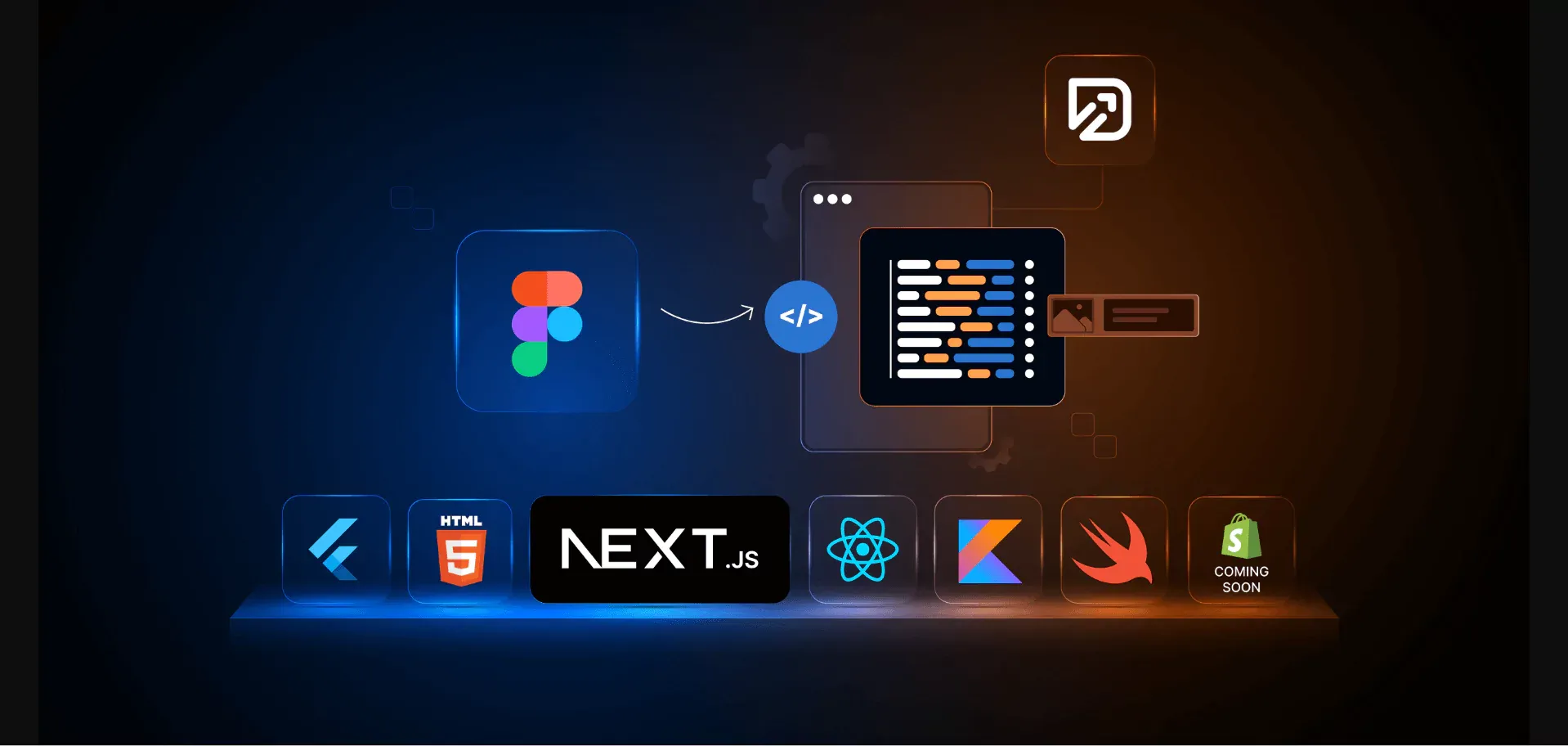 DhiWise- Figma to Code Plugin
DhiWise Figma plugin key features:
The plugin converts Figma design components to HTML/CSS, React, or Vue code and helps to build code-based prototypes.
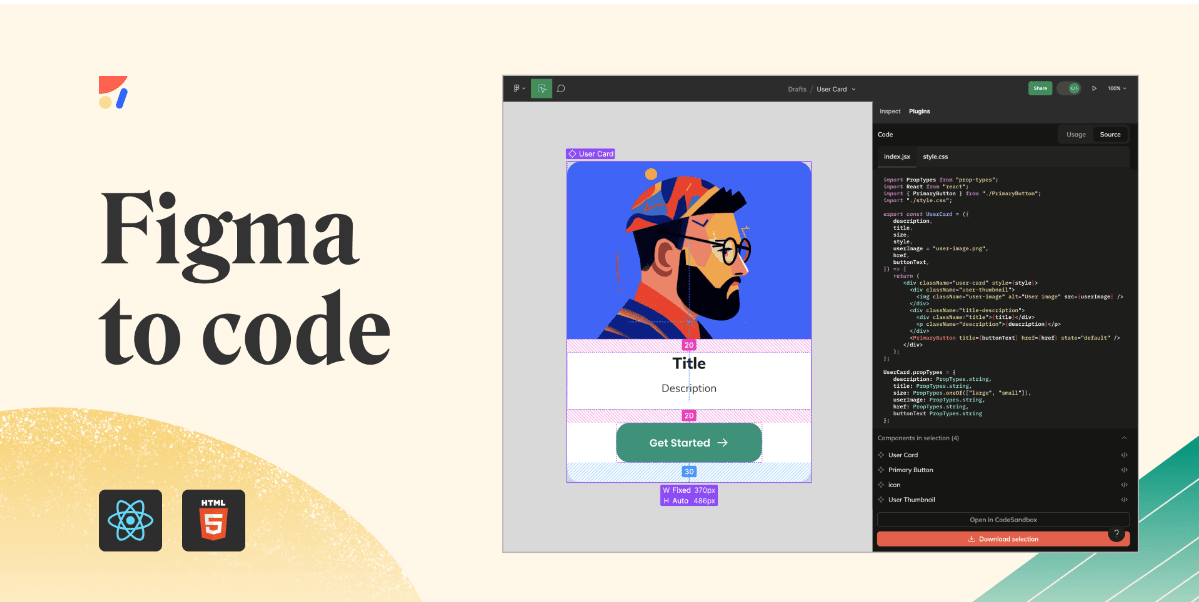
Anima Figma plugin key features:
Locofy.ai plugin converts your Figma design to production-ready front-end code for React, React Native, Angular,HTML/CSS, Next.js, Gatsby, and Vue.
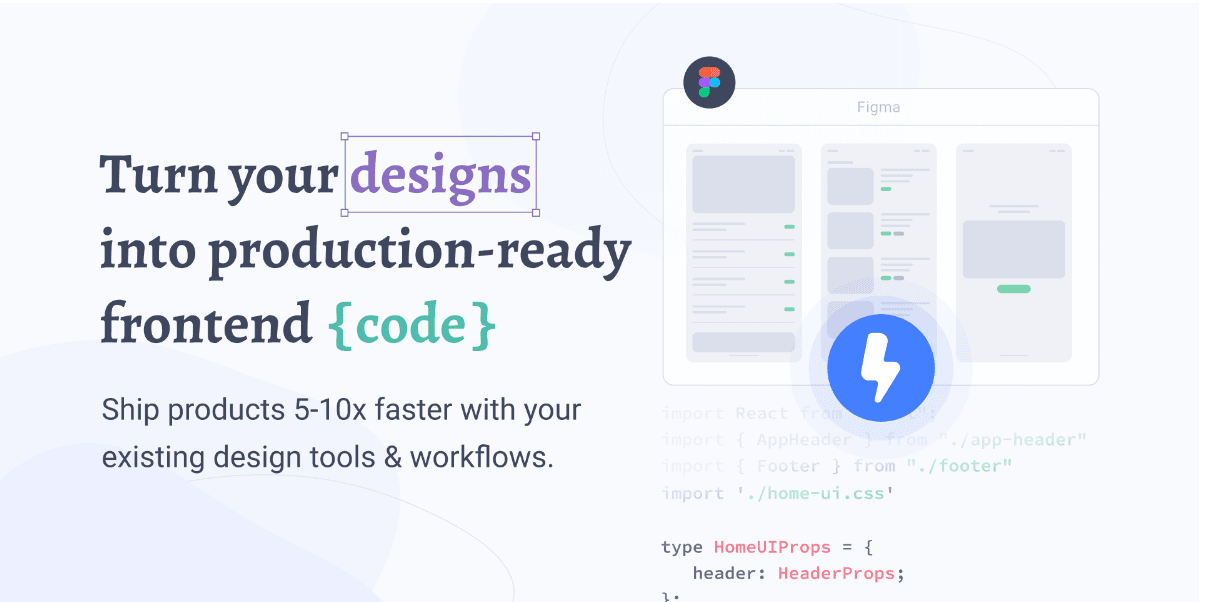
Key features of the Locofy Figma Plugin:
The plugin exports your Figma prototype to HTML/CSS, React, Next, Vue, Nuxt, and Angular code for individual components by selecting layers, interactions, or a prototype.
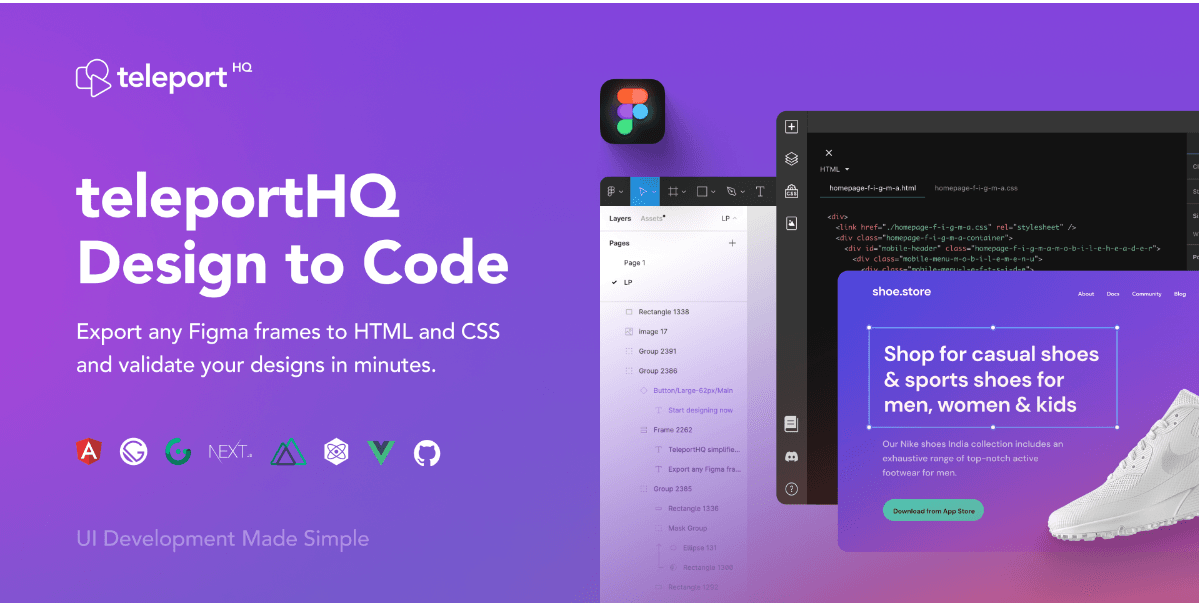
Key features of the TeleportHQ Figma plugin:
Turns Figma design into fully responsive HTML, React.js, Vue, and WordPress code.
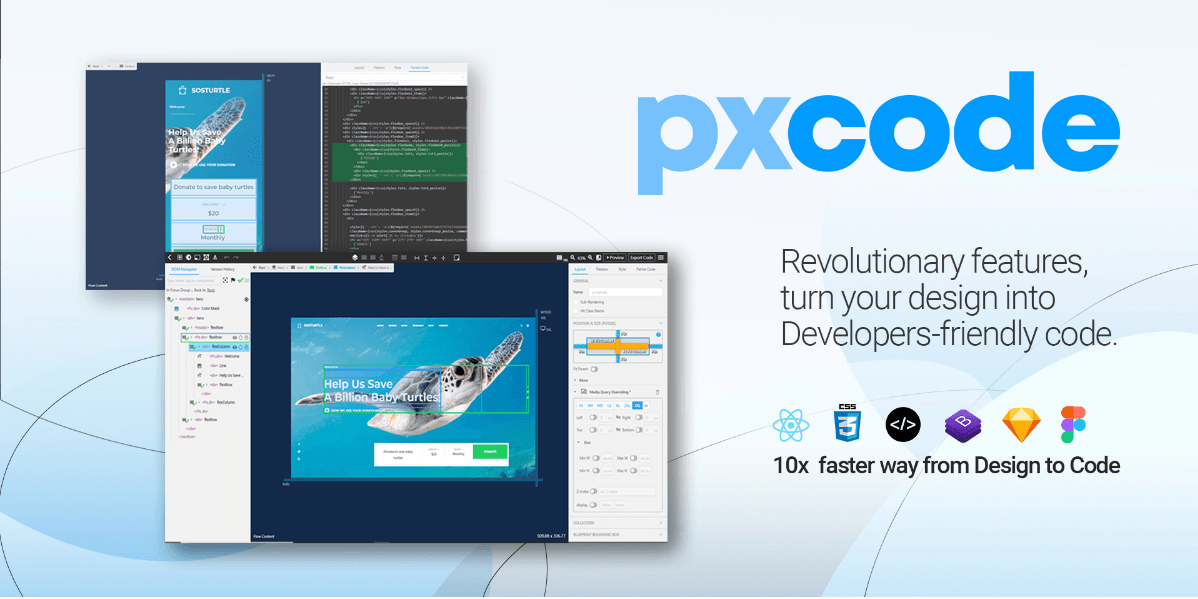
Key features of the pxCode Figma plugin:
The plugin generates clean React, HTML, and CSS code from your Figma design instantly.
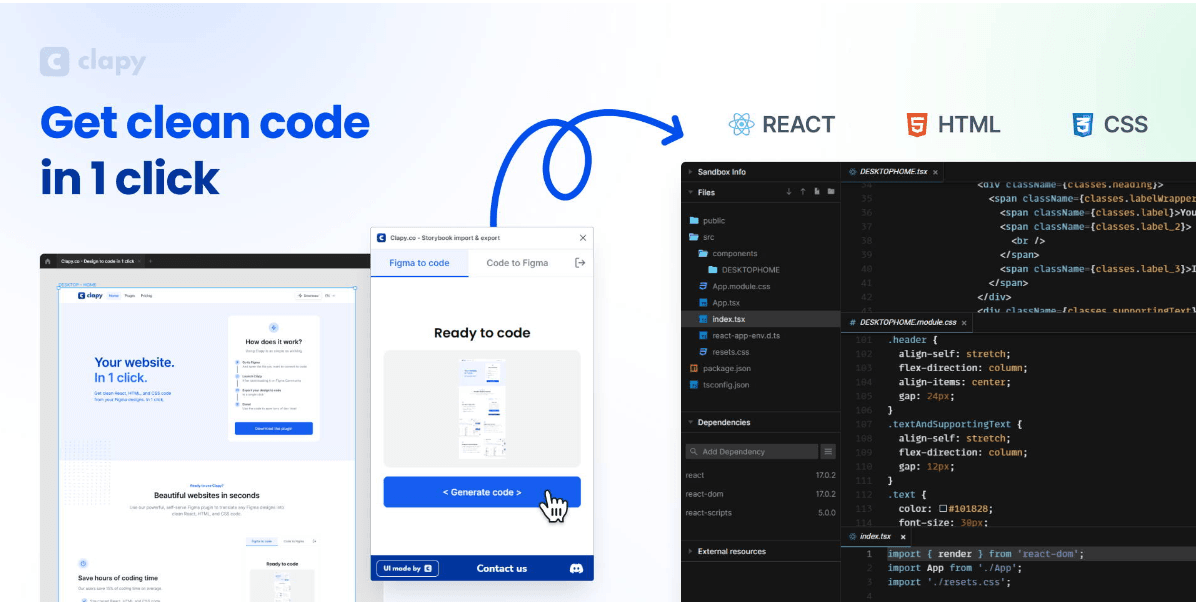
Key features of the Clapy Figma plugin:
The plugin claims to convert Figma design into Working apps and websites. It generates code for Flutter applications.
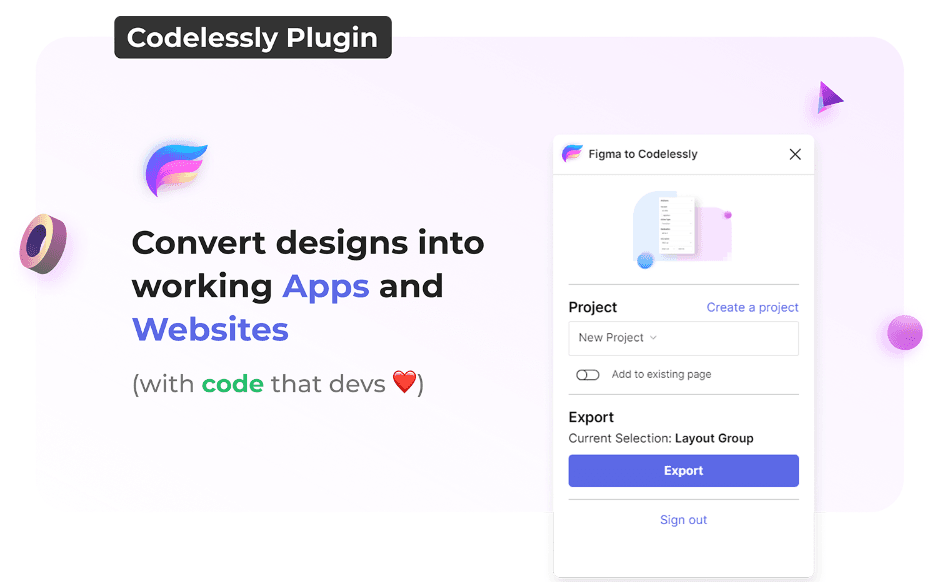
The key features of the Codelessly plugin:
With the plugin, you can export iOS and Flutter code from the Figma design and save your design to code generation time.
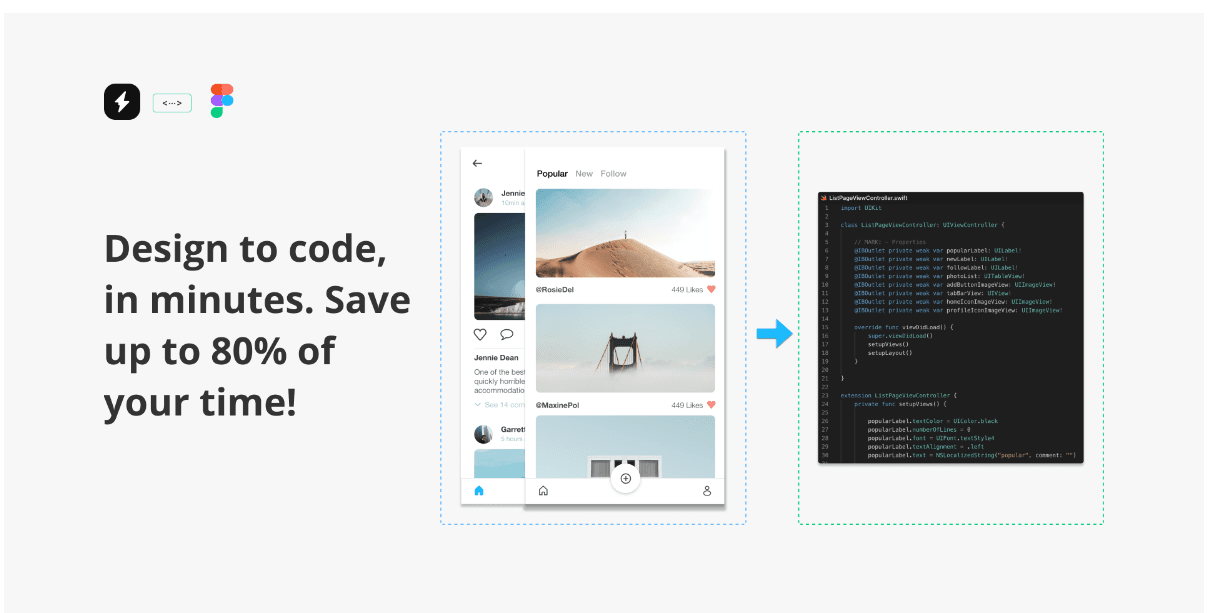
Key features of the Monday Hero Figma plugin:
The plugin generates designs with AI and then converts the design to HTML/CSS, React, and Vue code.
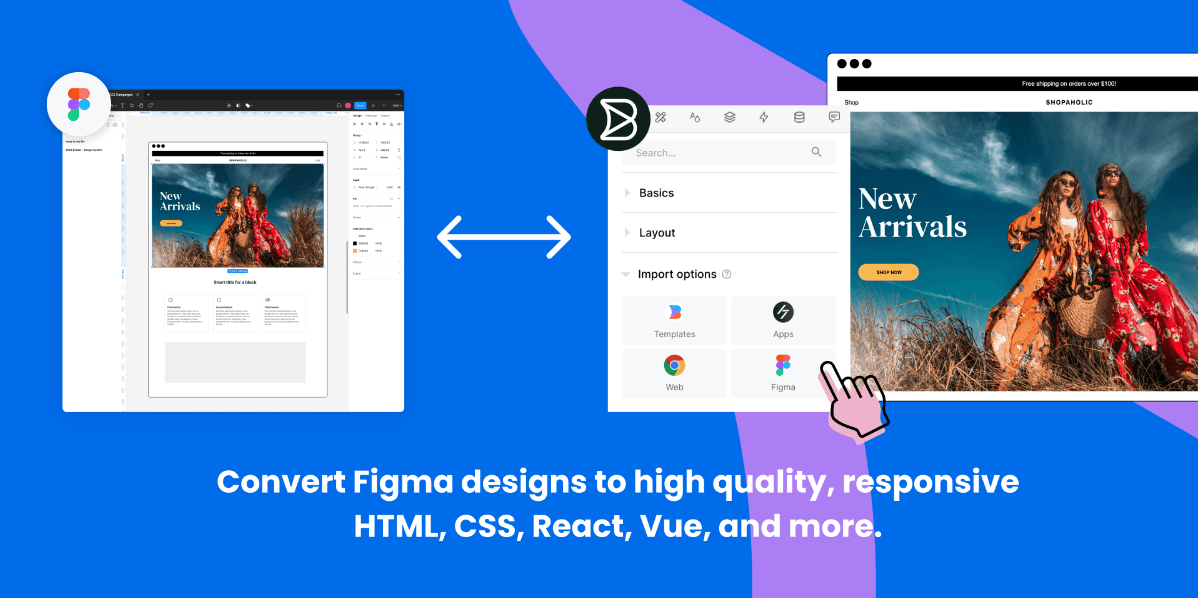
The key features of the Builder.io Figma plugin:
The plugin generates React.js components from Figma design. The generated code is clean, responsive, and extensible to your custom code or business logic.

Key Features Figma to React Plugin by Quest:
So, till now we have discussed the top 10 Figma Plugins for Design to Code. You can choose any one of them based on your UI code requirement, ease of use, and customization flexibility.
What next?
Find out how to install these plugins into your Figma platform.
You can run a plugin from the Figma Community or within Figma File or FigJam. Each plugin functions differently—some execute tasks instantly, while others require you to adjust settings or make selections like layers, objects, or frames. Only one plugin can run at a time, and paid plugins often include a trial period.
To access plugins, use the Actions menu in Figma Design, the More button in FigJam, or the Plugins tab in Dev Mode. For convenience, frequently used plugins can be pinned to the top of the sidebar in Dev Mode.
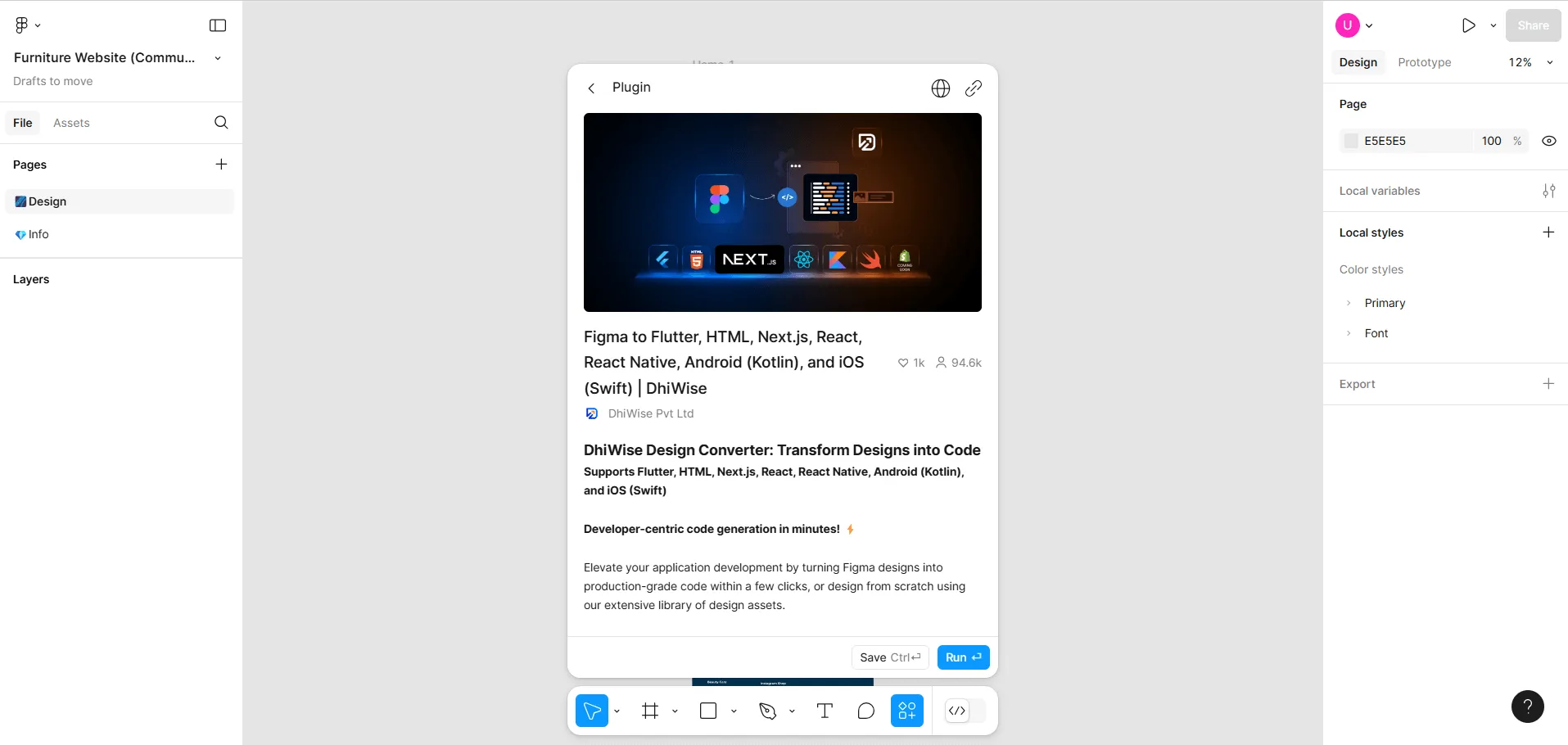 Accessing Figma Plugin
Figma plugins are a powerful tool that can help streamline your app development process. With so many plugins available, it can be challenging to identify which ones are truly necessary for your project. The blog brings you a list of the top 10 Figma to Code plugins that can help you to improve your UI/UX development workflow.
Using these plugins you can surely automate your design to code generation process for web and mobile applications and save your time for the more complex tasks.
Feeling excited to start?
Try out our Figma to code plugin that brings you everything from prebuilt templates, and choice of screen selection to customizable UI code generation and more.
Experience the magic of the auto-generated UI components and intuitive GUI for your app front-end development with DhiWise . Don’t forget to check out real-world use cases of DhiWise.